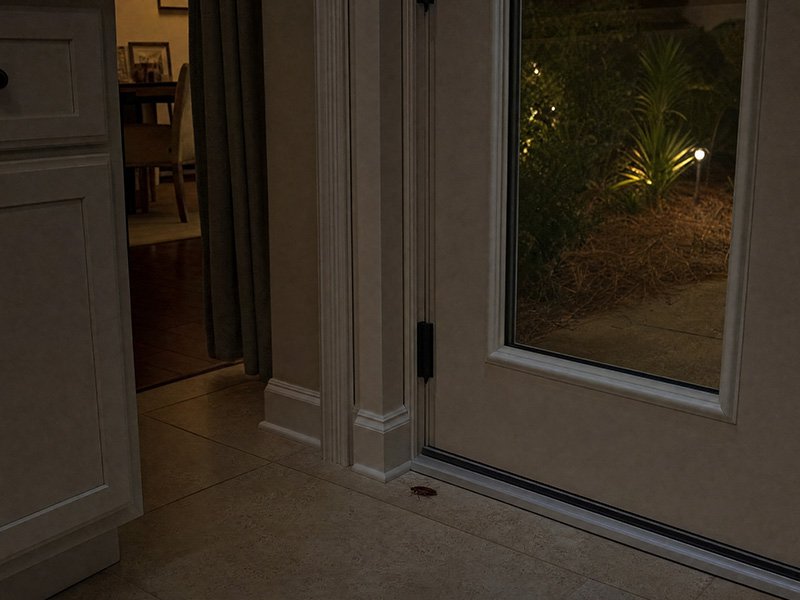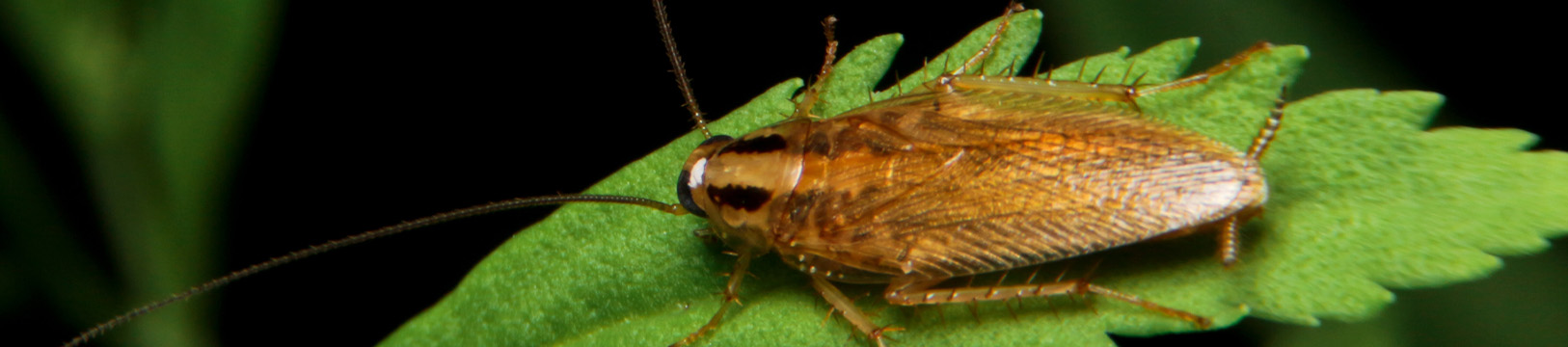
Asian cockroaches are an invasive species that is well established throughout Florida, including the western Panhandle. Although they closely resemble German cockroaches, their outdoor habits and strong ability to fly set them apart.
Asian cockroaches primarily live outdoors in mulch, leaf litter, lawns, and other organic material. They are also strong fliers and are attracted to light, which is why homeowners often find them around porches, patios, garages, and entryways after dark.
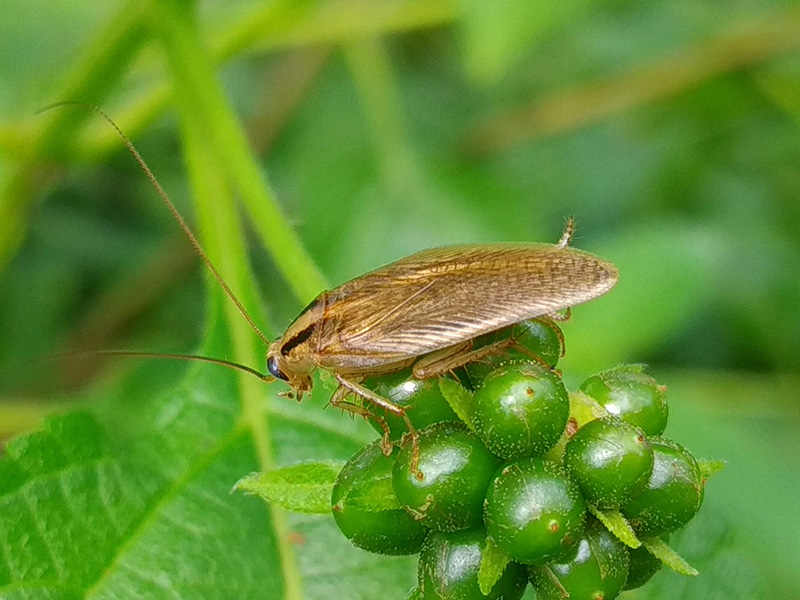
Asian cockroaches closely resemble German cockroaches, so behavior is often just as important as appearance when identifying them.
Adults are typically about 1/2 to 5/8 inch long.
They are light brown to tan with two dark, parallel stripes behind the head.
Asian cockroaches have a flattened, oval-shaped body with long antennae.
Both males and females have fully developed wings that extend beyond the abdomen.
Asian cockroaches are strong, active fliers. If a small tan cockroach takes off readily when disturbed, especially outdoors or near lights, it may be an Asian cockroach rather than a German cockroach.
Asian cockroaches are active through much of the warm season in Northwest Florida. Adults are especially abundant from February through May and again in August and September, while nymphs are most common from May through August. Activity declines as cooler weather arrives.
Asian and German cockroaches can look nearly identical, but where they live and how they behave are very different.
Asian cockroaches are primarily outdoor pests and are strong fliers. They are commonly found in lawns, mulch, leaf litter, and landscape beds, and may fly toward homes after dark.
German cockroaches rarely fly and are strongly associated with indoor infestations, particularly in kitchens, bathrooms, restaurants, apartments, and other areas with reliable food and moisture.
Finding a small tan cockroach indoors does not automatically mean you have German cockroaches, especially if the insect flies readily or outdoor activity is heavy.
Asian cockroaches become active around sunset and are strongly attracted to light. Porch lights, patio lighting, illuminated windows, and open doors can draw them toward homes after dark.
Properties with heavy landscaping, mulch, pine straw, or nearby wooded areas may experience especially noticeable activity because large populations can develop outdoors before dispersing toward lights at night.
Asian cockroaches prefer moist outdoor areas with plenty of organic material.
Common habitats include:
Homes surrounded by mulch, pine straw, wooded lots, or mature landscaping often experience higher Asian cockroach activity because these environments provide ideal outdoor habitat.
Asian cockroaches frequently enter homes accidentally while flying toward sources of light. Open doors, windows, garages, screened areas, and gaps around entryways can provide access.
Because this species is primarily adapted to outdoor living, a few individuals indoors do not necessarily indicate an established indoor infestation.
Asian cockroaches are primarily nuisance pests. Large outdoor populations can make porches, patios, garages, entryways, and other outdoor living areas unpleasant after dark.
Although they rarely establish indoor infestations, cockroaches that fly or wander inside can contaminate food and surfaces through contact after moving through decaying organic matter and other unsanitary environments.
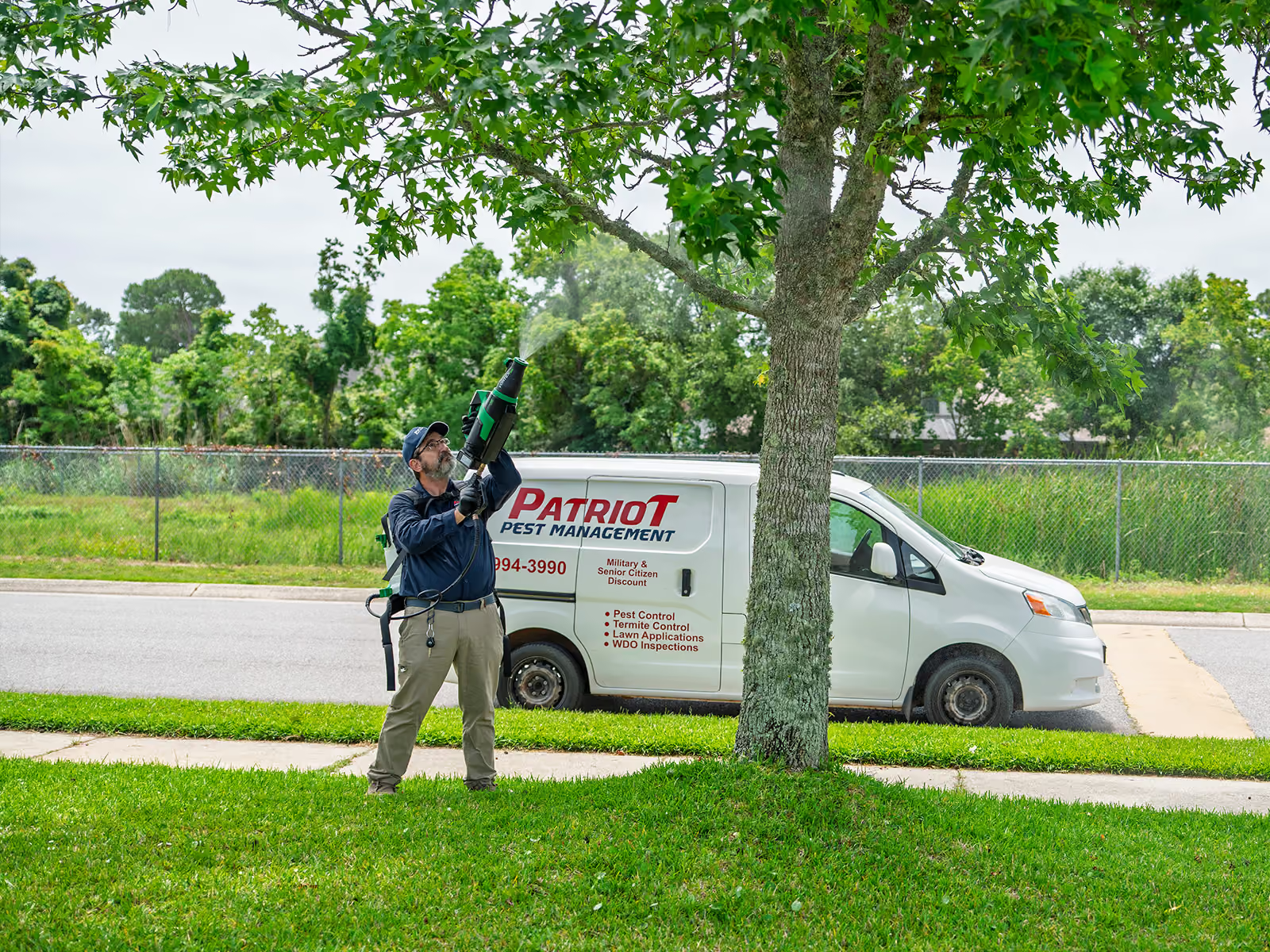
Asian cockroaches are outdoor pests, so effective control starts outside the home. Patriot Pest Management provides year-round residential pest control to reduce Asian cockroach activity around your property and help keep them from becoming an ongoing nuisance.
We also provide commercial pest control for restaurants, hotels, apartment communities, and other properties dealing with Asian cockroach activity around entrances, landscaping, patios, and other outdoor areas.
Established indoor infestations are uncommon because Asian cockroaches are adapted to outdoor habitats. Most Asian cockroaches found indoors have flown in from nearby landscape areas rather than developed into a breeding population inside the home.
They may survive indoors for a time, but they are much better adapted to outdoor habitats. Unlike German cockroaches, Asian cockroaches generally do not establish persistent indoor infestations.
Outdoor populations can build quickly when warm temperatures, moisture, and abundant organic material create favorable conditions. Large numbers may become especially noticeable after dark when adults begin flying toward lights.
Reducing thick mulch, pine straw, accumulated leaf litter, and other moist organic debris near the house can make the area less favorable for Asian cockroaches. Keeping outdoor lighting farther from doors and windows may also help. These steps can help, but they should not be relied on alone when Asian cockroach populations are established around the property.
If Asian cockroaches are becoming a nuisance around your home or business, contact Patriot Pest Management today to request a free quote.

Mario with Patriot Pest is fantastic to work with. He’s professional, easy to communicate with, and always delivers great customer service. Highly recommend Carlos and the team with Patriot Pest Management!
Rebekah K.
Pace, FL

When other companies came up short, Patriot Pest found the solution and delivered results. They arrive on time, communicate clearly, and stand behind their work with integrity. Great people, outstanding service, and a company you can trust. If you need pest control done right the first time, Patriot Pest is the company to call.
Jesa S.
Pace, FL

5 stars all around, courteous, prompt, communicated exactly with he was doing and how to keep the pets safe! Pay that man! It was simple, easy and fast!
Tim F.
Pensacola, FL






Helpful Tips & Info