Fire ants are ground-nesting ants known for their painful stings and aggressive defense of their colonies. They're a familiar problem in Pensacola and throughout Northwest Florida, especially in lawns and landscaped areas where people and pets spend time outdoors.
The red imported fire ant is the species homeowners are most likely to encounter. Originally from South America, this invasive species is now widespread throughout Florida.
Red imported fire ants have several identifying features, although some are difficult to see without magnification.
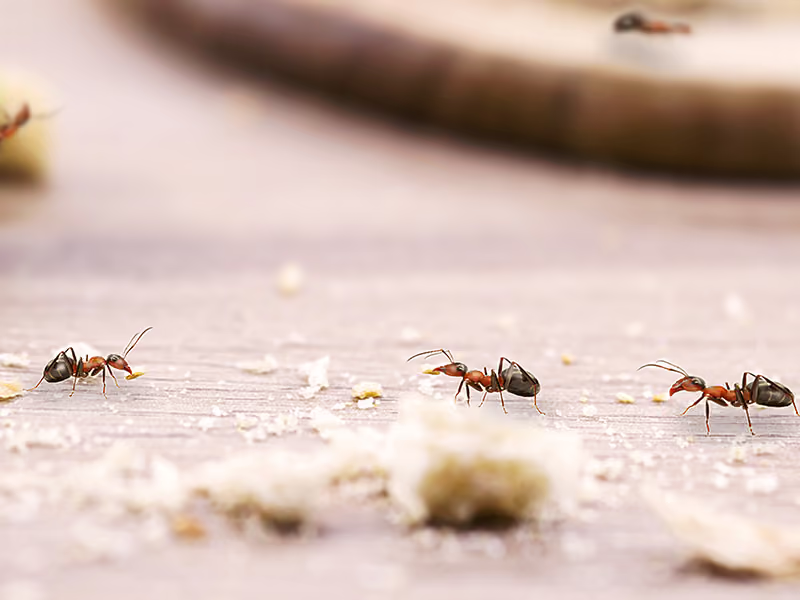
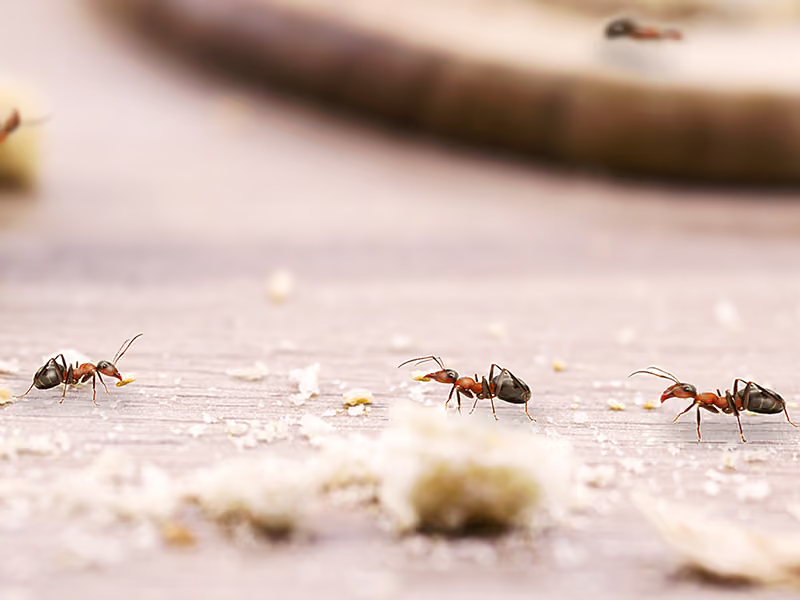
Worker ants range from approximately 1/8 to 1/4 inch long. Unlike many other ant species, workers within the same colony vary noticeably in size.
Their heads and midsections are typically reddish-brown, while their abdomens are usually dark brown to nearly black.
Fire ants have a narrow waist with two small segments connecting the middle of the body to the abdomen. They also have a stinger at the tip of the abdomen.
Their antennae are elbowed, with a two-segmented club at the end.
Reproductive fire ants develop two pairs of wings and may be seen during mating flights, particularly during warm weather following rain. The workers homeowners usually encounter are wingless.
Because several ant species have reddish coloring, color alone is not enough to identify a fire ant. Worker size differences, nesting habits, and behavior provide additional clues.
Fire ants can remain active throughout the year in Northwest Florida, although outdoor activity changes with soil temperatures, rainfall, and seasonal conditions.
Fire ant colonies persist year-round in Pensacola, Gulf Breeze, and across Northwest Florida, with the most noticeable outdoor activity generally occurring from spring through fall. During extreme summer heat, workers may forage more in the cooler morning and evening hours. Mild winter weather can also bring them aboveground.
Tropical fire ants (Solenopsis geminata), also called native fire ants, have been documented in northern Florida but are much less common in maintained residential lawns. They are more closely associated with sandy, relatively undisturbed environments, including longleaf pine habitats. Some workers have noticeably enlarged, square-shaped heads and, like red imported fire ants, can sting.
Fire ants build underground nests, often marked by mounds of loose, disturbed soil. These mounds vary in size and shape. Some are noticeably raised, while others are small, irregular piles of soil that can be easy to overlook in the grass.
In Northwest Florida, fire ant mounds commonly appear in lawns, landscaped areas, and along sidewalks, driveways, and patios.
Unlike many other ant nests, fire ant mounds typically lack an obvious entrance hole at the top. Workers use underground tunnels to enter and leave the nest.
Fire ant mounds may become more noticeable after rainfall as workers move soil to the surface. Heavy rain can also cause colonies to relocate from saturated ground.
A mature fire ant colony can contain thousands of ants underground, even when only a few are visible. Avoid disturbing a suspected mound to check for activity, as workers can quickly emerge and sting.
Fire ants feed on insects, sugary substances, and oily foods. Their dietary needs change throughout the year. In spring and summer, growing colonies need more protein to support developing young, while adult workers rely on sugars and fats for energy year-round. Workers may travel more than 100 feet from their nest in search of food.
The greatest concern with fire ants is their sting.
When a colony is disturbed, workers can quickly emerge and climb onto a person or animal. Fire ants grip the skin with their jaws and inject venom with their stingers.
Stings typically cause an immediate burning sensation, followed by redness, swelling, and itching. Small white pustules often develop within about a day. Some people experience serious allergic reactions that require emergency medical attention.
Fire ants are particularly troublesome around:
Their colonies can also interfere with normal yard activities, including mowing and landscaping.
Fire ants can also nest inside outdoor electrical boxes and equipment, where they may interfere with components and cause short circuits.
Fire ant colonies extend well below the visible mound, where the queen and developing ants are protected.
Spraying the ants visible on the surface or knocking down a mound generally does not eliminate the colony. Workers may continue emerging, and surviving colonies can rebuild or relocate.
Some red imported fire ant colonies also have multiple queens, allowing them to establish numerous nests across an area.
Even after an existing colony is eliminated, new fire ants can establish nests through mating flights or movement from nearby properties. That's why ongoing fire ant management can help reduce recurring problems.
At Patriot Pest Management, we help homeowners in Northwest Florida address fire ants in their lawns.
Fire ant mounds can make it difficult to enjoy your yard, especially when kids and pets are outside. Our Extended Shield and Total Shield home pest control plans include lawn fire ant control and ongoing protection against other covered pests.
If fire ant mounds are appearing around your Northwest Florida yard, we're here to help.
Yes, although indoor infestations are uncommon. Fire ants usually nest outdoors, but workers may enter homes in search of food or moisture. Occasionally, entire colonies establish nests indoors, particularly when flooding or drought disrupts their outdoor habitat.
Wash the area with soap and water and apply a cool compress. Avoid scratching or breaking blisters. Seek emergency medical attention if you experience trouble breathing, facial or throat swelling, or faintness.
Yes. Fire ant colonies can be transported in soil attached to sod, shrubs, and other nursery plants. This is one way they can be introduced to a property, even if fire ants weren't previously noticeable.
Don't let fire ant mounds make it difficult to enjoy your yard. Serving Escambia and Santa Rosa counties, as well as parts of Okaloosa County, Patriot Pest Management is ready to help.
Contact our locally owned and operated pest control company today to request a free quote.

Joey does a thorough and complete job. He has a very professional persona and is very courteous. Thank you Patriot for you great service and quality employees!
Tim T.
Pensacola, FL

5 stars all around, courteous, prompt, communicated exactly with he was doing and how to keep the pets safe! Pay that man! It was simple, easy and fast!
Tim F.
Pensacola, FL

When other companies came up short, Patriot Pest found the solution and delivered results. They arrive on time, communicate clearly, and stand behind their work with integrity. Great people, outstanding service, and a company you can trust. If you need pest control done right the first time, Patriot Pest is the company to call.
Jesa S.
Pace, FL






Helpful Tips & Info