Formosan termites are an invasive species of subterranean termite found in Northwest Florida. They are an important structural pest in the region and one homeowners should be able to recognize, particularly during their spring and early-summer swarm season.
Their presence in the western Florida Panhandle is significant enough that the Florida Department of Agriculture and Consumer Services conducts surveillance for Formosan termite swarmers in Escambia, Santa Rosa, and Okaloosa counties during the major swarm season.
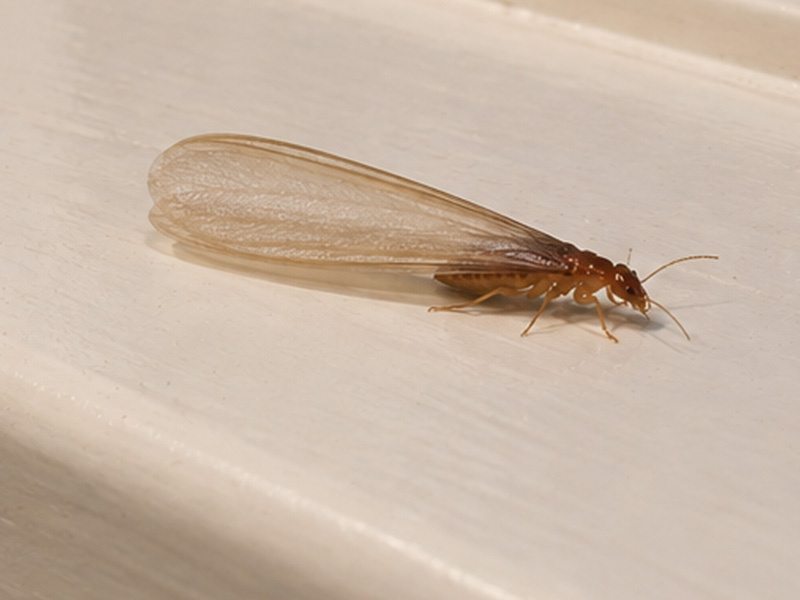
Homeowners are most likely to encounter Formosan termite swarmers, also called alates. Workers and soldiers usually remain concealed underground, inside wood, in mud tubes, or within nesting material.
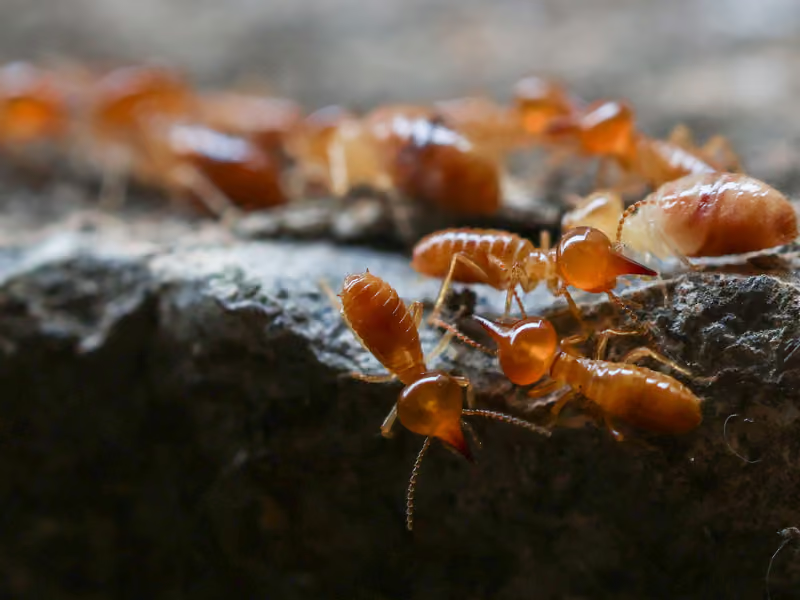
Formosan termite swarmers are generally orange to light amber-brown and measure approximately 1/2 to 3/5 inch long when their wings are included.
They have straight, bead-like antennae and four translucent wings of approximately equal size that extend well beyond the body. The body and wings are covered with tiny hairs, although these can be difficult to see without magnification.
Their amber coloring is one of the more useful characteristics for distinguishing Formosan swarmers from the darker swarmers produced by some other subterranean termite species.
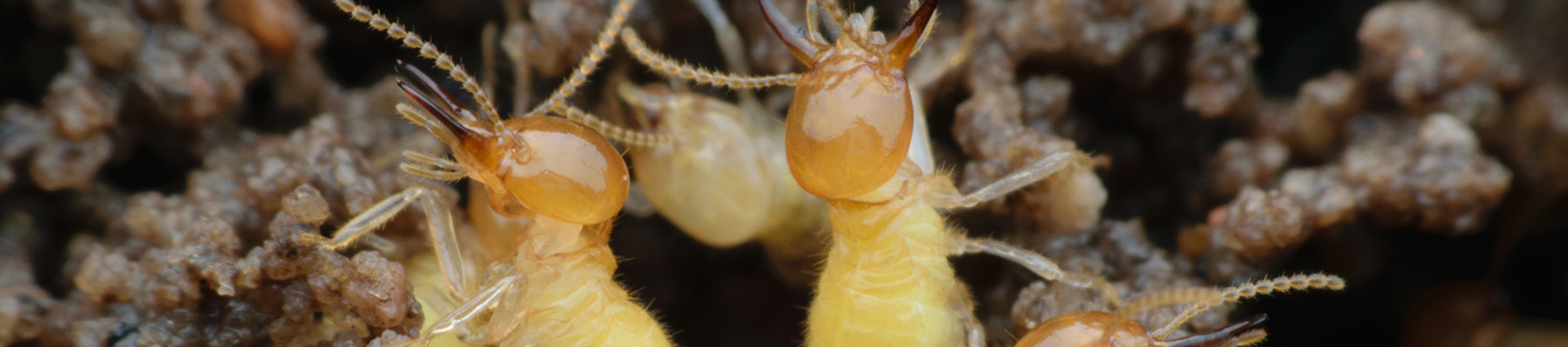
Soldiers have pale bodies and distinctive brownish-orange heads that are rounded or teardrop-shaped. Their curved mandibles help defend the colony.
Formosan termite soldiers also have a gland on the front of the head that can release a white, sticky defensive substance when disturbed.
Homeowners are much less likely to encounter soldiers unless infested wood, a mud tube, or nesting material is disturbed.
Workers are white to cream-colored and spend most of their time concealed within the colony, wood, soil, and foraging tubes.
Because workers of different subterranean termite species can look very similar, finding pale termites in damaged wood usually isn't enough to determine which species is present.
Formosan termite colonies are active year-round in Northwest Florida. Activity is generally higher during the warmer months and moderates during cooler weather, but the termites do not become inactive in winter.
Because Formosan termites spend much of their lives concealed, homeowners may not realize a colony is nearby or that a structure has been infested.
Possible signs include:
Swarming is one of the most noticeable signs of Formosan termite activity. In Florida, Formosan termite flights typically occur during spring and early summer, with swarmers emerging after sunset and often gathering around lights.
Finding swarmers outdoors indicates that an established colony is somewhere in the surrounding area, but it does not necessarily mean the home itself is infested. Large numbers of swarmers emerging from inside a structure are more concerning and should be investigated.
Mud tubes and damaged wood can indicate subterranean termite activity, but those signs alone usually aren't enough to determine whether the termites are Formosan or another subterranean species.
The ability to construct carton nests is one characteristic that makes Formosan termites different from the subterranean termites many homeowners are more familiar with.
Carton is a spongy material made from soil, chewed wood, termite saliva, and fecal material. It retains moisture and helps create the humid environment the colony needs.
These nests can develop underground, inside trees, and within walls or other structural spaces. Formosan termites can even establish an aerial colony without a connection to the soil when they have access to the moisture, cellulose, and protected environment they need to survive.
That ability can make Formosan termite infestations particularly difficult to detect when a nest develops within a structure.
A mature Formosan termite colony can contain several million termites, allowing large numbers of workers to feed and forage across a substantial area.
Formosan termites feed on cellulose and can damage structural lumber and other wood-based materials. Because much of this activity occurs out of sight, damage can develop before homeowners realize termites are present.
They can also infest living trees. Colonies generally feed on dead wood within the tree, but extensive damage can weaken the tree over time.
Their large colonies, extensive foraging range, and ability to establish carton nests above ground are among the reasons Formosan termites are considered particularly destructive structural pests.
Both Formosan and Eastern subterranean termites occur in Northwest Florida, but there are several differences that can help distinguish them.
Formosan termite swarmers are generally orange to light amber-brown and typically fly after sunset during spring and early summer. Eastern subterranean termite swarmers are darker and are more commonly seen during daylight earlier in the year.
The soldiers also look different. Formosan termite soldiers have a rounded or teardrop-shaped brownish-orange head, while Eastern subterranean termite soldiers have a more elongated, rectangular head.
These characteristics can help narrow down the species, but workers, mud tubes, and termite damage can look very similar. A professional inspection is the best way to determine which subterranean termite is present.
Patriot Pest Management provides professional termite control for Formosan and Eastern subterranean termites throughout Escambia, Santa Rosa, and Okaloosa counties.
Our termite service features the Sentricon® System, which is used to eliminate termite colonies and provide ongoing protection. Termite protection is also included with Patriot's Total Shield residential plan for homeowners who want termite, general pest, and yard pest coverage together.
If you've found swarmers, discarded wings, damaged wood, or another possible sign of termites, Patriot can inspect the property and determine the appropriate next step.
Formosan termites cannot eat through concrete, but they can use small cracks, gaps, joints, and openings around plumbing or utilities to reach wood and other cellulose materials within a structure.
A few swarmers can sometimes enter from an outdoor swarm, especially during Northwest Florida's swarm season. Finding large numbers emerging from inside the home is more concerning. If you're unsure where they came from, save a few specimens or take clear photos and have the property inspected.
Standard homeowners' insurance policies generally do not cover termite damage. Because policies and coverage can vary, check with your insurance provider to confirm what your specific policy covers.
If you've found termite swarmers or another possible sign of Formosan termites around your Northwest Florida property, Patriot Pest Management can help determine what you're dealing with.
Call (850) 549-9096 or request a free quote online to get started.

Mario with Patriot Pest is fantastic to work with. He’s professional, easy to communicate with, and always delivers great customer service. Highly recommend Carlos and the team with Patriot Pest Management!
Rebekah K.
Pace, FL

When other companies came up short, Patriot Pest found the solution and delivered results. They arrive on time, communicate clearly, and stand behind their work with integrity. Great people, outstanding service, and a company you can trust. If you need pest control done right the first time, Patriot Pest is the company to call.
Jesa S.
Pace, FL

5 stars all around, courteous, prompt, communicated exactly with he was doing and how to keep the pets safe! Pay that man! It was simple, easy and fast!
Tim F.
Pensacola, FL






Helpful Tips & Info