Culex nigripalpus, sometimes called the Florida SLE mosquito, is one of the most significant disease-vector mosquitoes in the state. Unlike container-breeding species, it develops in flooded ground pools and low-lying areas, with populations that can surge dramatically after heavy rainfall.
This species is a dusk-and-night biter that feeds on both birds and mammals, which allows it to pick up viruses circulating in bird populations and pass them to people and animals. Its behavior and abundance make it a priority species for mosquito surveillance in Florida.
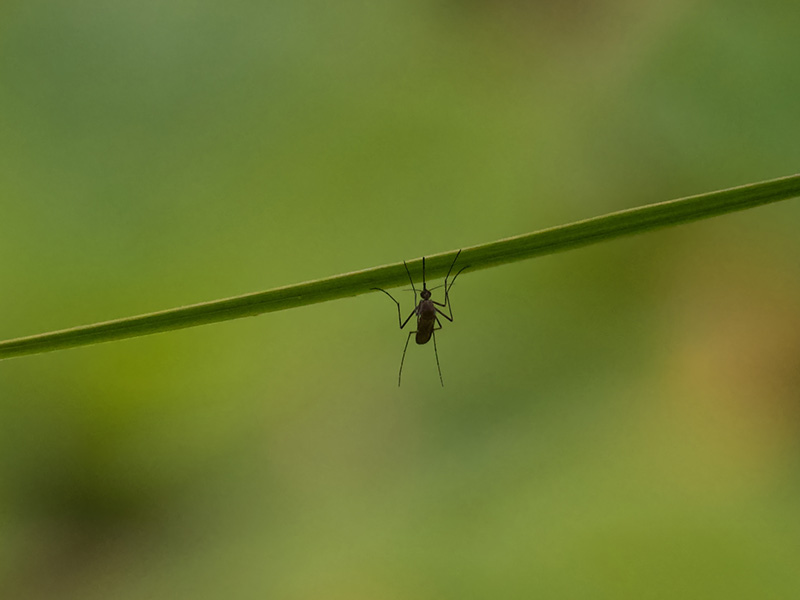
Culex nigripalpus lacks the bold markings of container-breeding species and has a more uniform appearance. Because several Culex species have a similar plain, dark appearance, confirming Culex nigripalpus usually requires close examination by a trained professional.
Adults are small to medium in size, generally similar in size to other common Culex mosquitoes.
This mosquito is dark brown to blackish overall, without the white banding or lyre-shaped thorax markings seen on Aedes aegypti.
The legs are dark and lack the prominent white bands seen on mosquitoes such as Aedes aegypti.
Culex nigripalpus is most active at dusk, night, and dawn, resting in shaded vegetation during the day rather than biting in daylight.
Numbers can rise sharply after heavy rain creates newly flooded breeding sites. Warm temperatures allow immature mosquitoes to develop quickly, often leading to noticeable increases in adult activity within about a week.
Culex nigripalpus breeds in freshly flooded, ground-level habitats rather than containers.
Common breeding sites include:
Culex nigripalpus is drawn to properties near low-lying, poorly drained areas where rainwater collects, as well as nearby ditches, retention ponds, or pasture land.
Because it feeds at dusk and into the night, it's most often encountered during evening outdoor activities rather than during the day. Properties near standing floodwater after heavy rain are particularly likely to see a rise in activity.
A noticeable jump in evening mosquito activity following a rainstorm is a common sign that Culex nigripalpus populations have surged nearby.
A noticeable increase in mosquitoes after heavy rain, especially around dusk and after dark, can point to nearby Culex breeding activity.
Mosquitoes resting in shaded vegetation during the day and biting primarily in the evening are consistent with Culex nigripalpus, but these behaviors alone cannot confirm the species.
Culex nigripalpus is considered the primary vector of St. Louis encephalitis (SLE) virus in Florida and is also involved in the transmission of eastern equine encephalitis (EEE) and, under certain conditions, West Nile virus. Because it feeds on both birds and mammals, it plays a key role in moving these viruses from wild bird populations into people and pets.
Patriot Pest Management's seasonal mosquito control services combine targeted treatments for mosquito resting and breeding sites with the innovative In2Care® Mosquito Control System.
Patriot Pest Management also provides commercial mosquito control for Northwest Florida businesses managing outdoor spaces.
Culex nigripalpus bites at dusk and night and breeds in flooded ground pools, ditches, and low-lying areas after rain. Aedes aegypti bites during the day and breeds in small containers around the home. Their markings differ too — Culex nigripalpus is uniformly dark with unbanded legs, while Aedes aegypti has white leg bands and a lyre-shaped marking on the thorax.
Heavy rain creates newly flooded breeding sites where female Culex nigripalpus mosquitoes lay their eggs. During warm weather, immature mosquitoes develop quickly, which can lead to a noticeable increase in adults within about a week.
Unlike some mosquito species that stay close to where they hatch, Culex nigripalpus can travel several miles in search of blood meals and breeding sites. That means mosquitoes on your property may have developed elsewhere.
If evening mosquito activity is making it difficult to enjoy your yard, Patriot Pest Management can help. Contact us today to learn more about seasonal mosquito control and request your free estimate.

5 stars all around, courteous, prompt, communicated exactly with he was doing and how to keep the pets safe! Pay that man! It was simple, easy and fast!
Tim F.
Pensacola, FL

Mario with Patriot Pest is fantastic to work with. He’s professional, easy to communicate with, and always delivers great customer service. Highly recommend Carlos and the team with Patriot Pest Management!
Rebekah K.
Pace, FL

When other companies came up short, Patriot Pest found the solution and delivered results. They arrive on time, communicate clearly, and stand behind their work with integrity. Great people, outstanding service, and a company you can trust. If you need pest control done right the first time, Patriot Pest is the company to call.
Jesa S.
Pace, FL