Odorous house ants are one of the most common ants found inside homes across the United States, including Northwest Florida. They frequently invade kitchens, pantries, bathrooms, and other areas where they can find food or water.
Although they do not damage structures or pose a serious threat to people, they can become an ongoing nuisance because of their large colonies, multiple nesting sites, and persistent foraging.
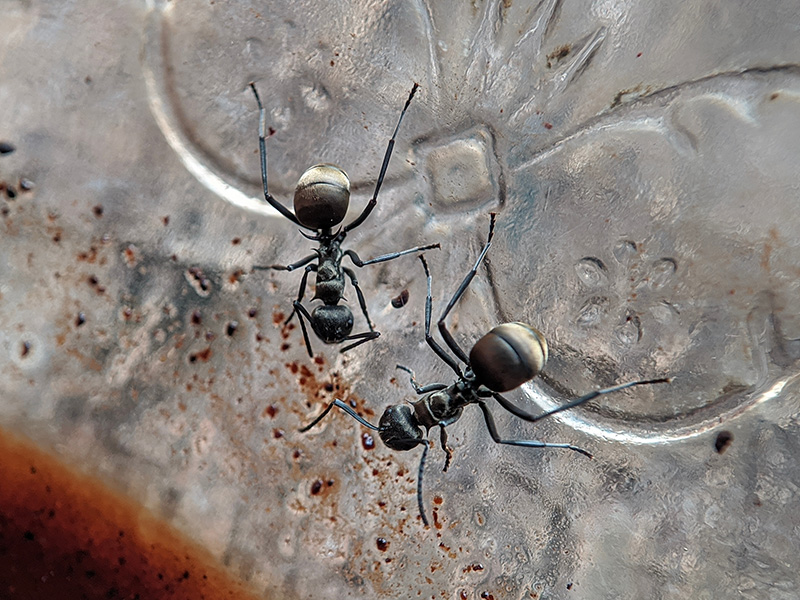
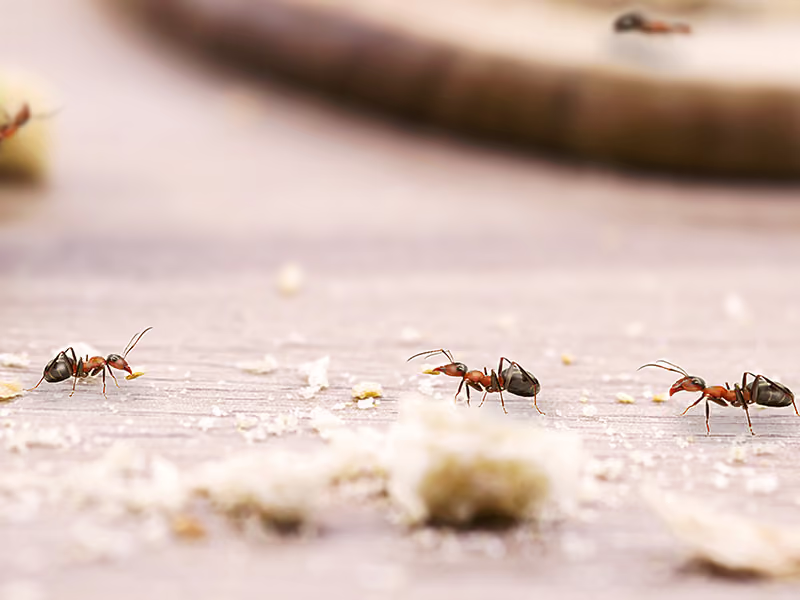
Odorous house ants are small, dark-colored ants that are often mistaken for other household ant species.
Workers measure about 1/16 to 1/8 inch long.
They are dark brown to black over their entire body.
Odorous house ants have a narrow waist and a single flattened node that is difficult to see from above.
Their antennae are bent or elbowed.
Winged reproductive ants have two pairs of wings, although homeowners are much more likely to notice wingless workers.
Unlike ghost ants, odorous house ants are uniformly dark rather than two-toned. They can also be confused with white-footed ants, another dark household ant found in Florida, but white-footed ants have noticeably pale feet.
One of the odorous house ant’s best-known identifying characteristics is the coconut-like odor it produces when crushed.
Odorous house ant activity in Northwest Florida typically increases from spring through fall as warmer weather supports more outdoor foraging and colony movement. Activity usually slows during the cooler western Panhandle winter, although colonies nesting inside heated structures can remain active.
Odorous house ants commonly nest outdoors but readily move into homes and businesses.
Outside, they often nest beneath:
Indoors, they may establish nests in:
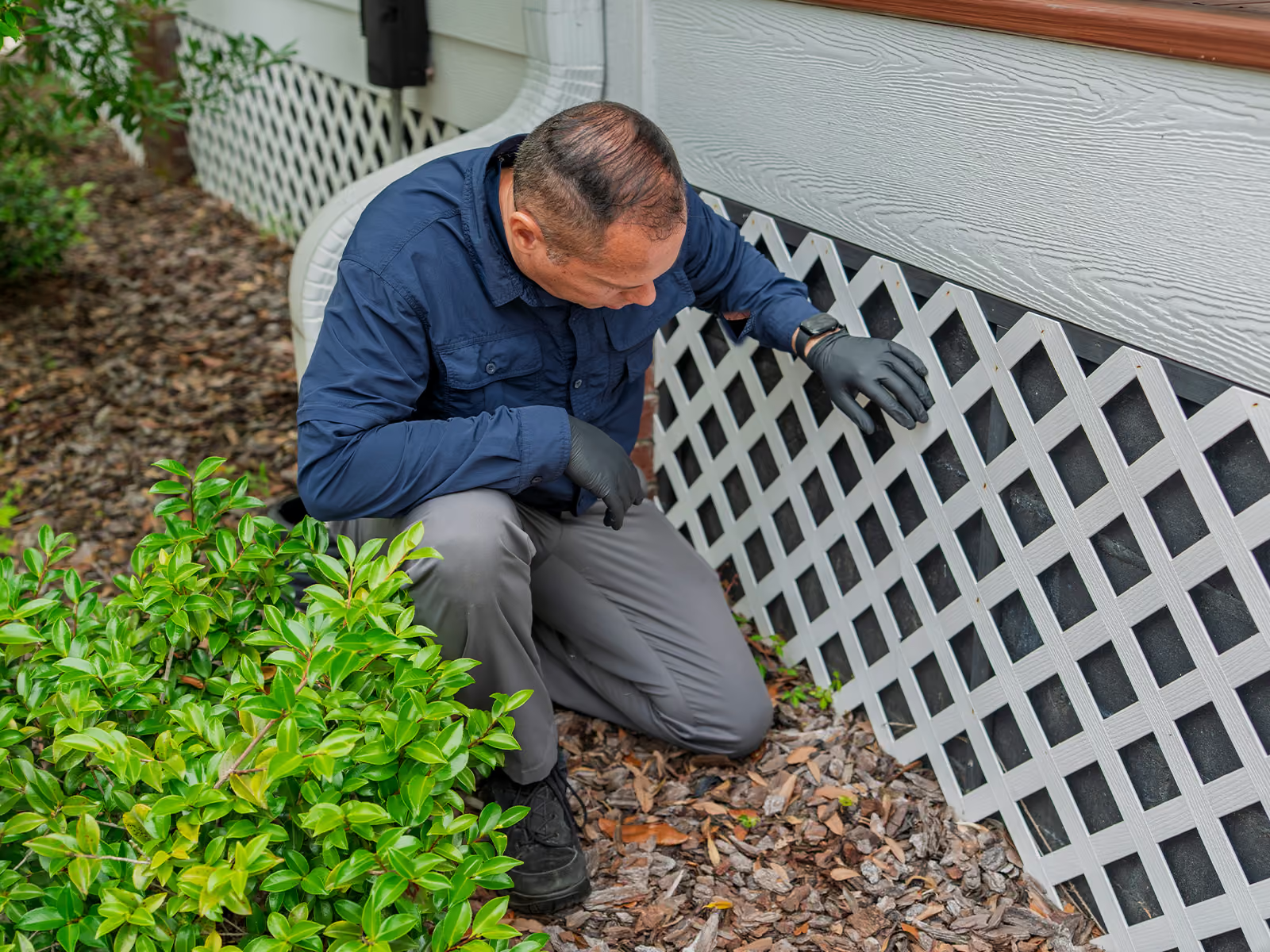
They frequently travel along utility lines, tree branches, and foundation edges before entering through small cracks and gaps.
Odorous house ants are nuisance pests that do not sting or damage wood.
As they forage, they crawl across countertops, pantries, food packaging, and food preparation surfaces, contaminating food through contact. They may also pick up and transfer bacteria after traveling through unsanitary areas.
In restaurants, grocery stores, healthcare facilities, and other commercial properties, even small infestations can create sanitation concerns and leave a poor impression on customers.
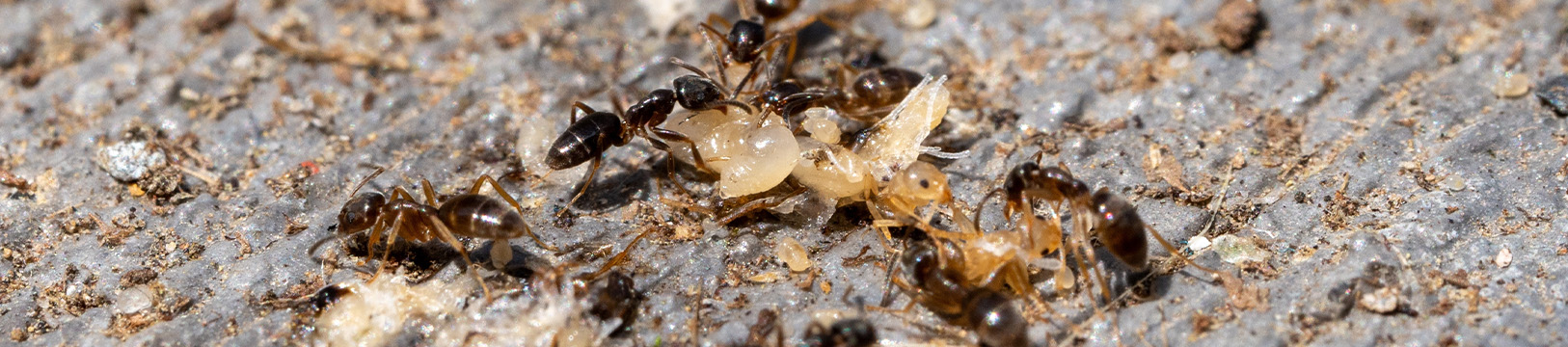
Odorous house ants form large colonies that often contain multiple queens. Instead of relying on a single nest, a colony may split into several connected nesting sites, allowing the population to survive even if one area is disturbed.
Homeowners often notice the ants disappear for a short time after cleaning or using over-the-counter products, only to find them returning days later.
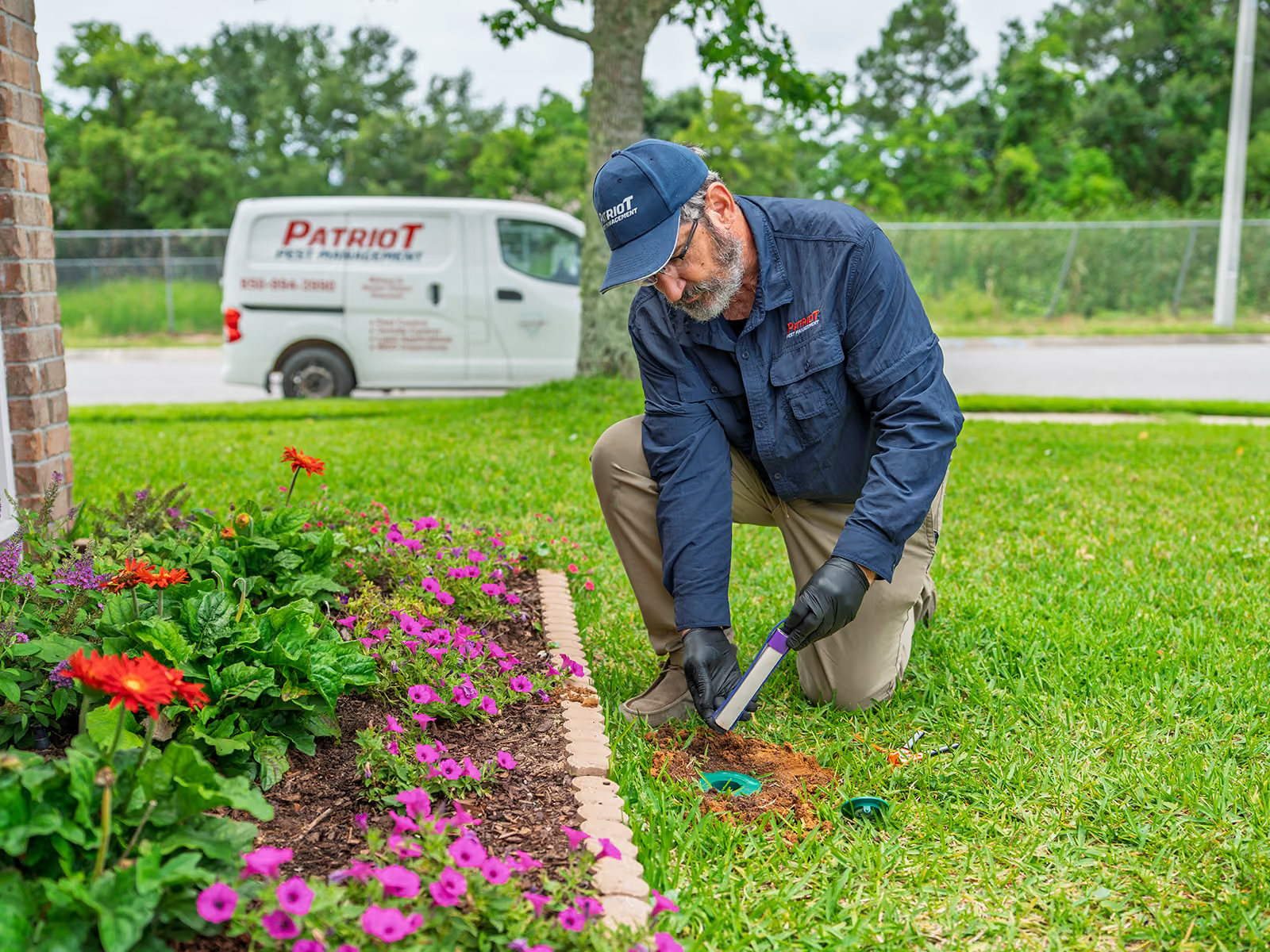
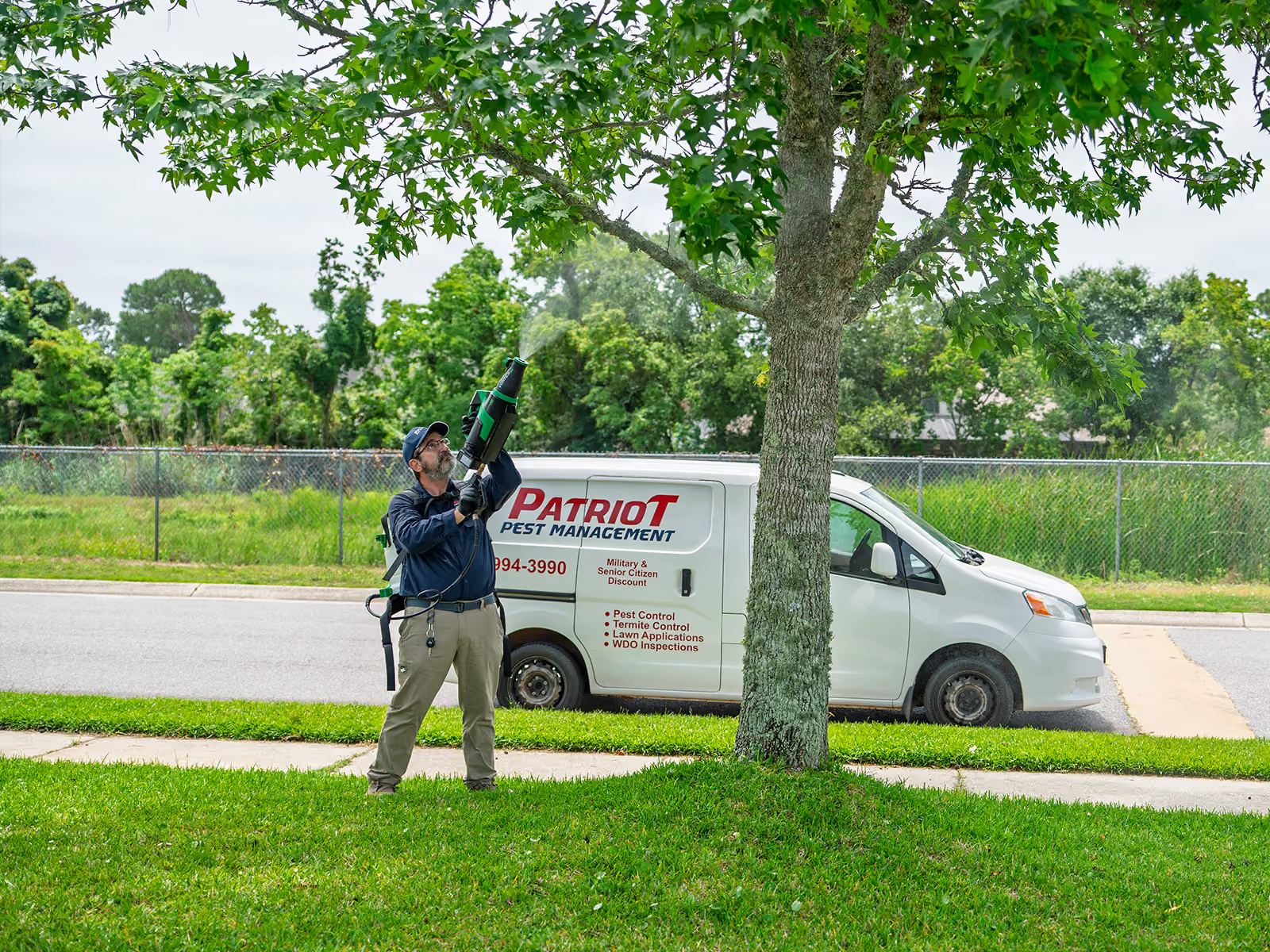
Patriot Pest Management provides ongoing residential pest control services to eliminate active odorous house ant infestations and help keep them from coming back.
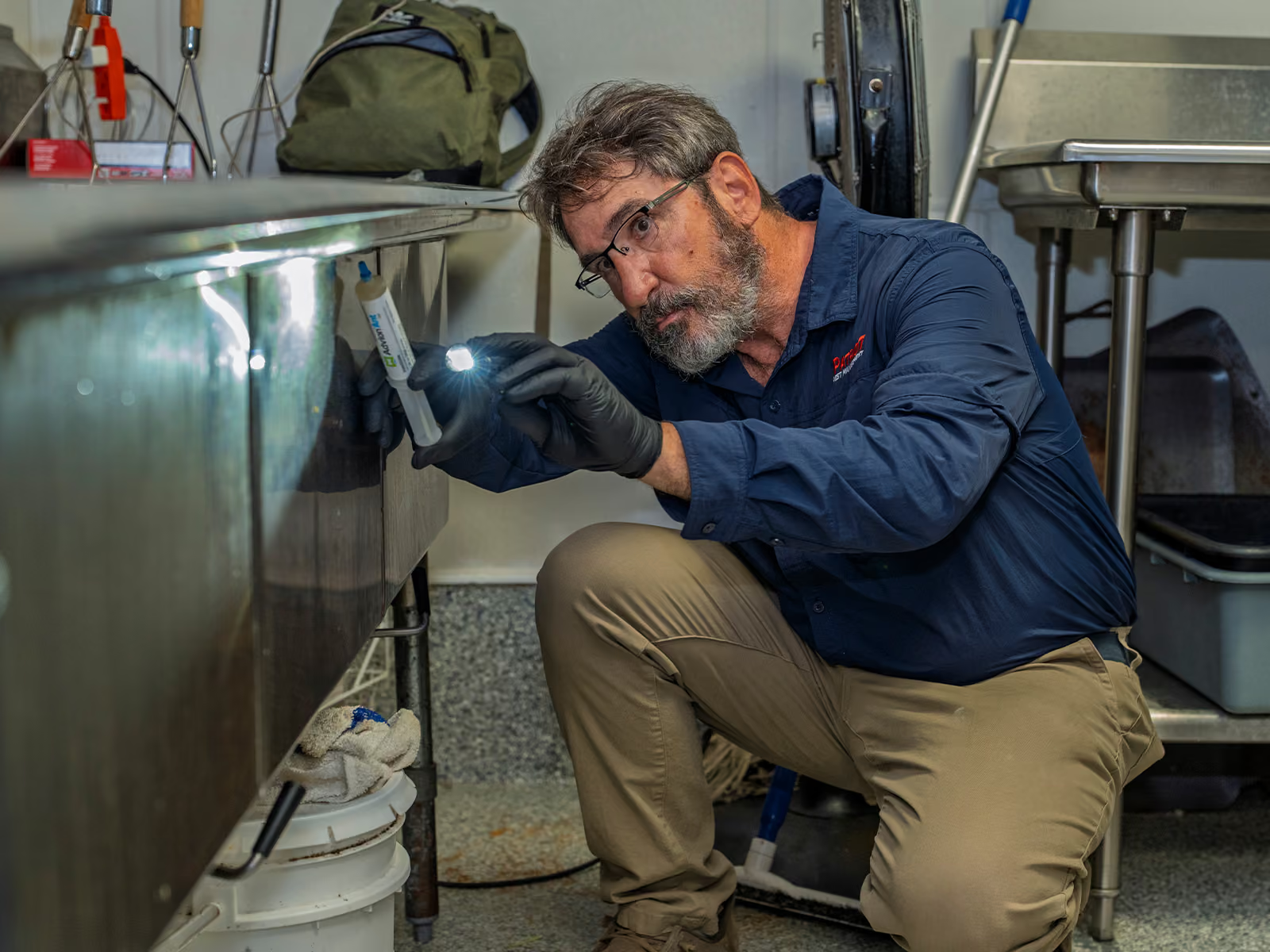
We also treat odorous house ants in commercial properties, including restaurants, hotels, and healthcare facilities.
If odorous house ants are showing up in your home or business in Pensacola or elsewhere in our Northwest Florida service area, request a free quote and let us take care of the problem.
Yes. Odorous house ants may relocate when conditions around a nest change, including after periods of heavy rain. That movement can make them more noticeable indoors as workers search for new nesting areas, food, or moisture.
Odorous house ants are especially attracted to sweets and honeydew, but they will also forage for grease, crumbs, pet food, and other foods inside homes and businesses.
Kitchens provide easy access to food and moisture. Even small spills, crumbs, pet food, or water around sinks can keep workers returning once they have found a dependable resource.
If odorous house ants are showing up in your home or business, contact Patriot Pest Management today.

Mario with Patriot Pest is fantastic to work with. He’s professional, easy to communicate with, and always delivers great customer service. Highly recommend Carlos and the team with Patriot Pest Management!
Rebekah K.
Pace, FL

Joey does a thorough and complete job. He has a very professional persona and is very courteous. Thank you Patriot for you great service and quality employees!
Tim T.
Pensacola, FL

5 stars all around, courteous, prompt, communicated exactly with he was doing and how to keep the pets safe! Pay that man! It was simple, easy and fast!
Tim F.
Pensacola, FL






Helpful Tips & Info