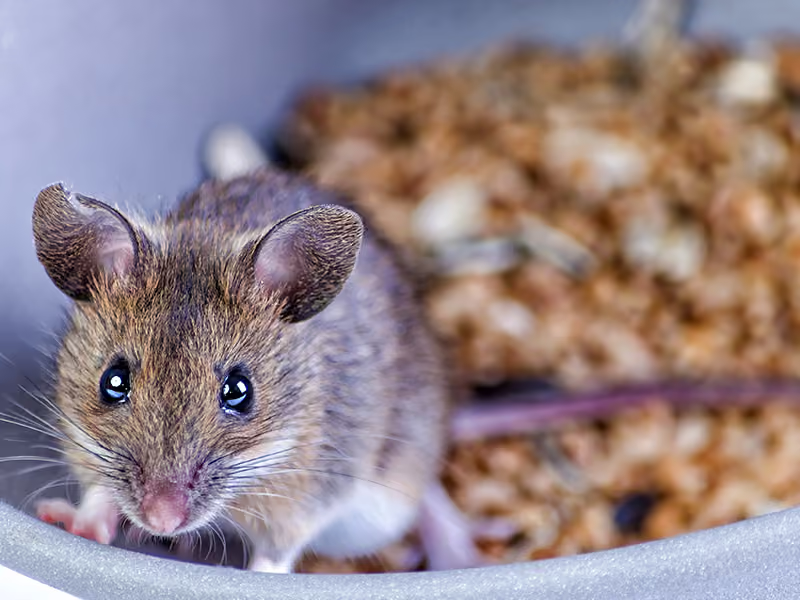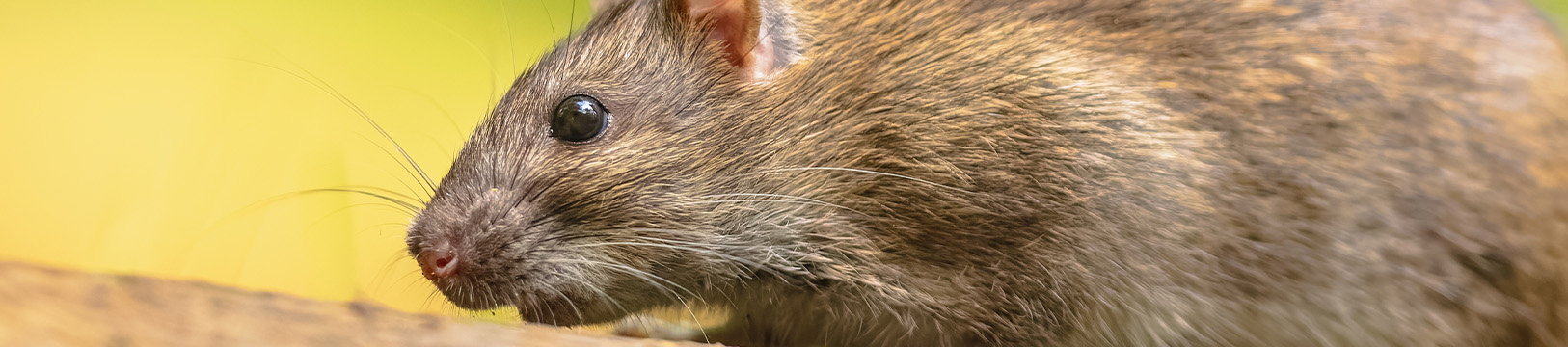
Norway rats, also known as brown rats or sewer rats, are large, heavy-bodied rodents that typically live at or below ground level. They are commonly associated with urban areas, agricultural properties, garbage collection areas, and locations where food and water are readily available.
Unlike roof rats, Norway rats are strong burrowers. They commonly nest beneath buildings, concrete slabs, porches, sheds, and debris, but they can also enter crawl spaces, garages, and lower areas of homes and businesses.
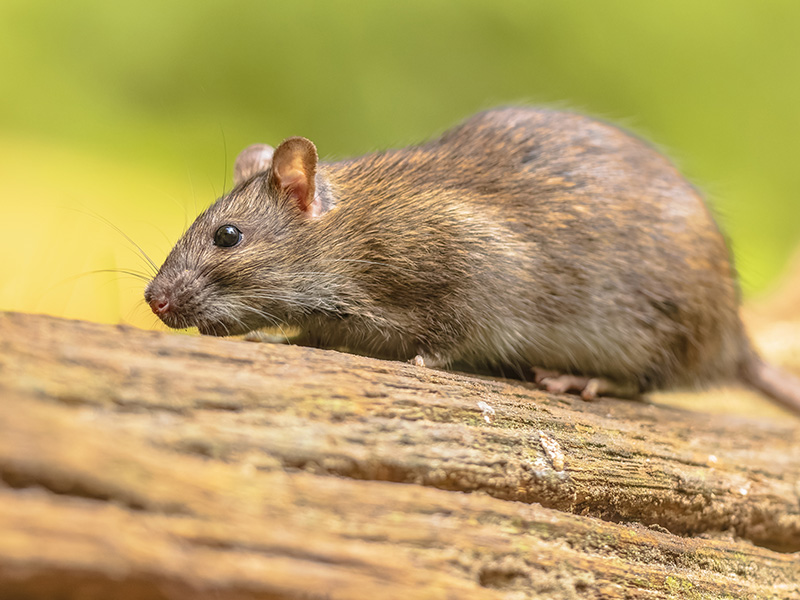
Norway rats are larger and heavier-bodied than roof rats, with a different set of physical traits.
Adults typically measure 9 to 11 inches in length, not including a 6 to 8 inch tail.
Norway rats are brown with scattered black hairs and a lighter-colored belly.
Their ears are small relative to their head.
Their tails are thick and sparsely haired. It is usually about the same length as the head and body combined.
Norway rats have a blunt nose and a heavier, stockier build compared to the more slender, agile build of roof rats.
Norway rats are nocturnal and live in groups with a dominant male. They are strong swimmers and capable diggers.
Norway rats stay active year-round in Pensacola and Northwest Florida. They may become more noticeable around homes and businesses during cooler weather as they seek food and protected shelter.
Norway rats favor ground-level and underground spaces, whereas roof rats prefer elevated hiding spots.
Common hiding places include:
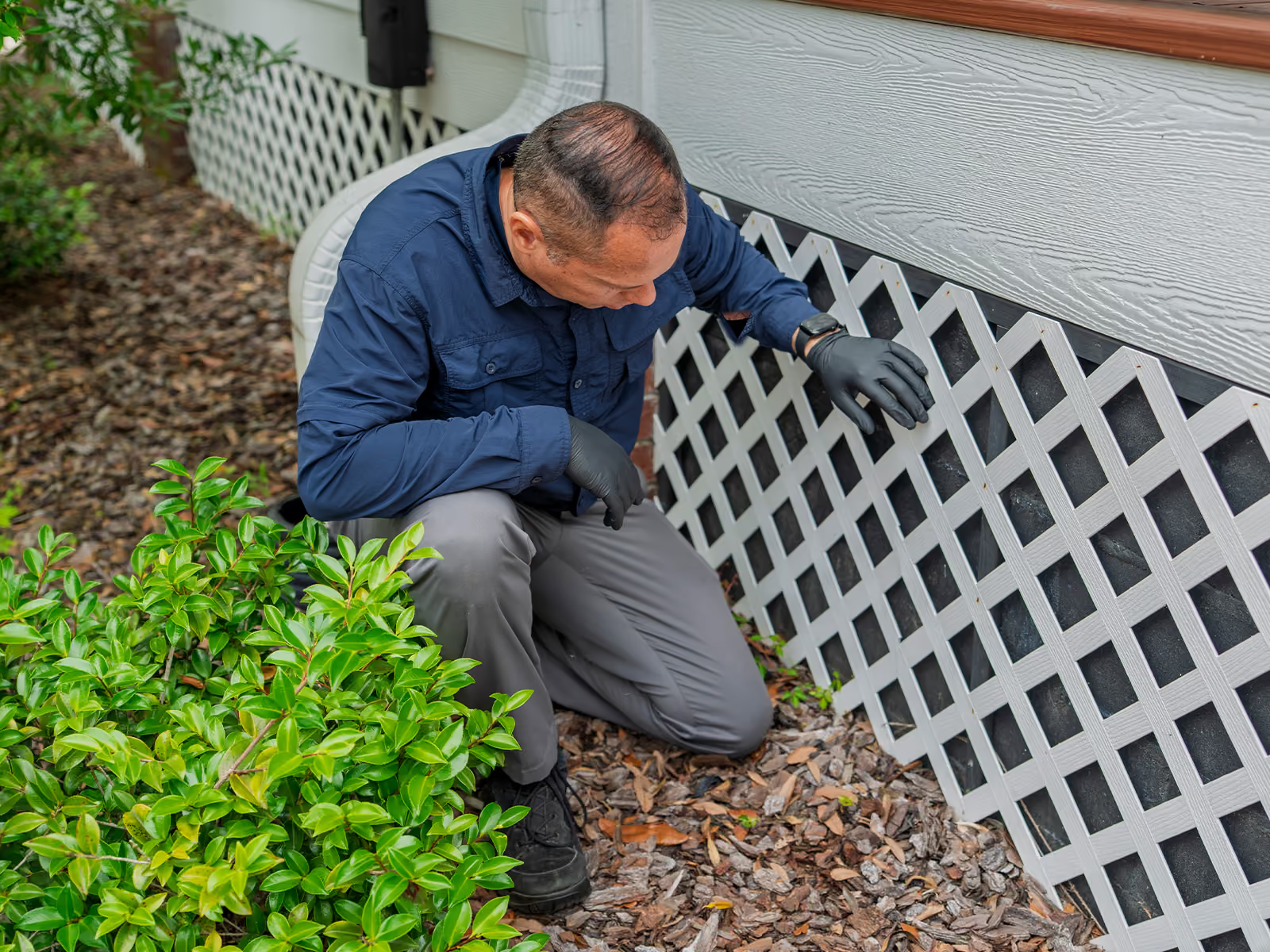
Norway rats enter structures at ground level, often through gaps around foundations, utility penetrations, or poorly sealed doors.
Unsecured garbage, pet food left outdoors, and cluttered yards can attract rats seeking food and shelter. Once nearby, a rat may exploit a small gap to move indoors, particularly into crawl spaces or lower floors.
A single sighting near a foundation, crawl space, or ground-level entry may indicate a nearby burrow or nesting area.
Burrow openings near foundations, walls, fence lines, or debris are a strong sign of Norway rat activity.
Other signs include capsule-shaped droppings, gnaw marks near ground level, greasy rub marks along walls, and worn paths through soil or vegetation.
Norway rat activity is usually concentrated near the ground, though these rats can climb when necessary.
Yes. Norway rats can contaminate food, surfaces, and stored materials with their droppings and urine. They may also carry pathogens and parasites that create health concerns for people and pets.
Their gnawing can damage wood, plastic, stored belongings, and electrical wiring. Extensive burrowing beneath slabs, walkways, or other structures may also contribute to property damage.
Patriot Pest Management offers home pest control plans for Norway rats and other common household pests. We'll inspect the property for burrows, entry points, and conducive conditions, then recommend the right plan for your situation.
Patriot Pest Management also provides commercial pest control for Northwest Florida businesses facing Norway rat activity.
No. Norway rats are larger, stockier ground-dwellers with proportionally shorter, thick tails and small ears, while roof rats are slimmer climbers with long, thin tails and large ears. Norway rats burrow near foundations and at ground level; roof rats nest above ground in trees and attics.
Norway rat burrow entrances are often about three inches wide and may be found beside foundations, beneath slabs, or near stored materials and debris.
Norway rats often stay within about 100 to 150 feet of their shelter when food and water are available nearby. They may travel farther when resources become scarce or their nesting area is disturbed.
If you've found a burrow, noticed droppings, or seen other signs of Norway rat activity, Patriot Pest Management can help. Call (850) 994-3990 or request your free estimate online.

When other companies came up short, Patriot Pest found the solution and delivered results. They arrive on time, communicate clearly, and stand behind their work with integrity. Great people, outstanding service, and a company you can trust. If you need pest control done right the first time, Patriot Pest is the company to call.
Jesa S.
Pace, FL

Mario with Patriot Pest is fantastic to work with. He’s professional, easy to communicate with, and always delivers great customer service. Highly recommend Carlos and the team with Patriot Pest Management!
Rebekah K.
Pace, FL

Joey does a thorough and complete job. He has a very professional persona and is very courteous. Thank you Patriot for you great service and quality employees!
Tim T.
Pensacola, FL






Helpful Tips & Info