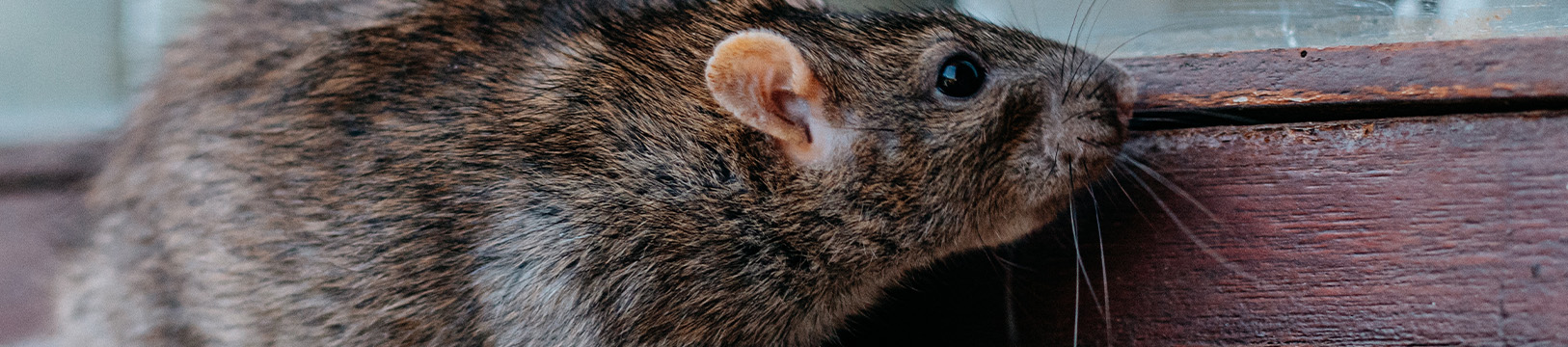
Roof rats, also known as black rats or ship rats, are a common rodent pest in Northwest Florida. They thrive in warm climates and are strong climbers, often nesting in trees, attics, and other elevated areas that provide shelter and easy access to food.
Unlike Norway rats, which tend to remain closer to ground level, roof rats prefer to travel and nest above ground. Their climbing ability often brings them into attics and other upper areas of homes and buildings.
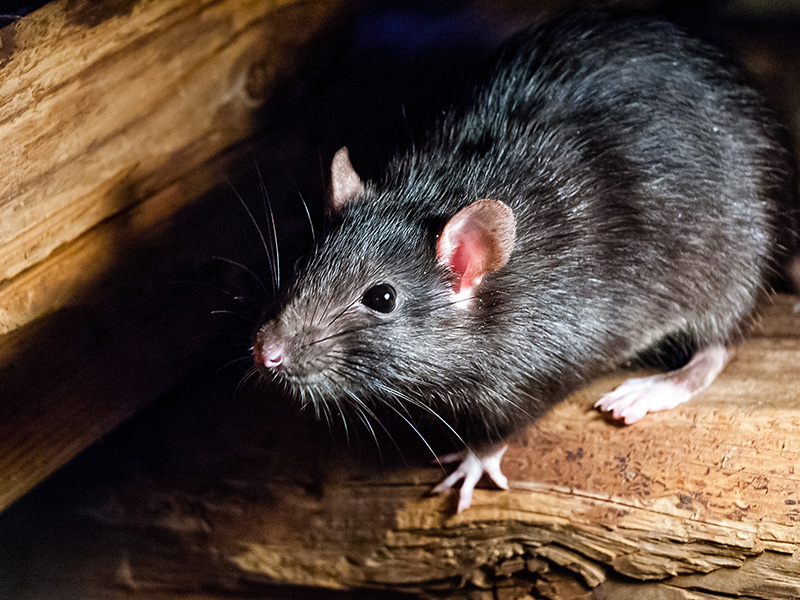
Roof rats are sometimes confused with Norway rats, but they have several distinguishing features.
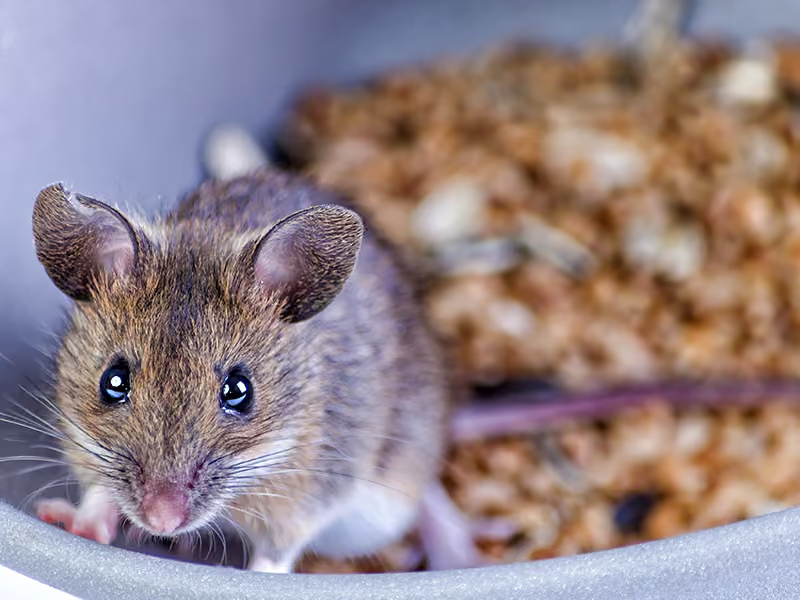
Adults are generally 6 to 8 inches long, not including a tail that is typically longer than the head and body combined.
Roof rats are black or dark brown with a lighter-colored belly, often gray or white.
Their ears are large and nearly hairless.
Their tail is thin, long, and nearly hairless. It typically extends beyond the combined length of the head and body, which helps distinguish roof rats from Norway rats.
Roof rats are nocturnal and exceptional climbers, using trees, wires, and rooflines to access structures.
Roof rats remain active throughout the year in Northwest Florida. Breeding occurs year-round, with increased activity during the spring and fall. Homeowners may also notice more indoor activity during cooler months as roof rats take advantage of sheltered nesting sites.
Roof rats favor quiet, protected areas above ground. Outdoors, they may nest in trees, dense vegetation, sheds, or piles of stored materials. Once inside a structure, they often settle in areas that receive little regular activity.
Common nesting locations include:
Tree limbs touching the house, utility lines, and gaps along the roofline give roof rats easy access to attics and upper floors.
Roof rats enter structures while foraging for food and seeking shelter, particularly as they move along trees, wires, and rooflines.
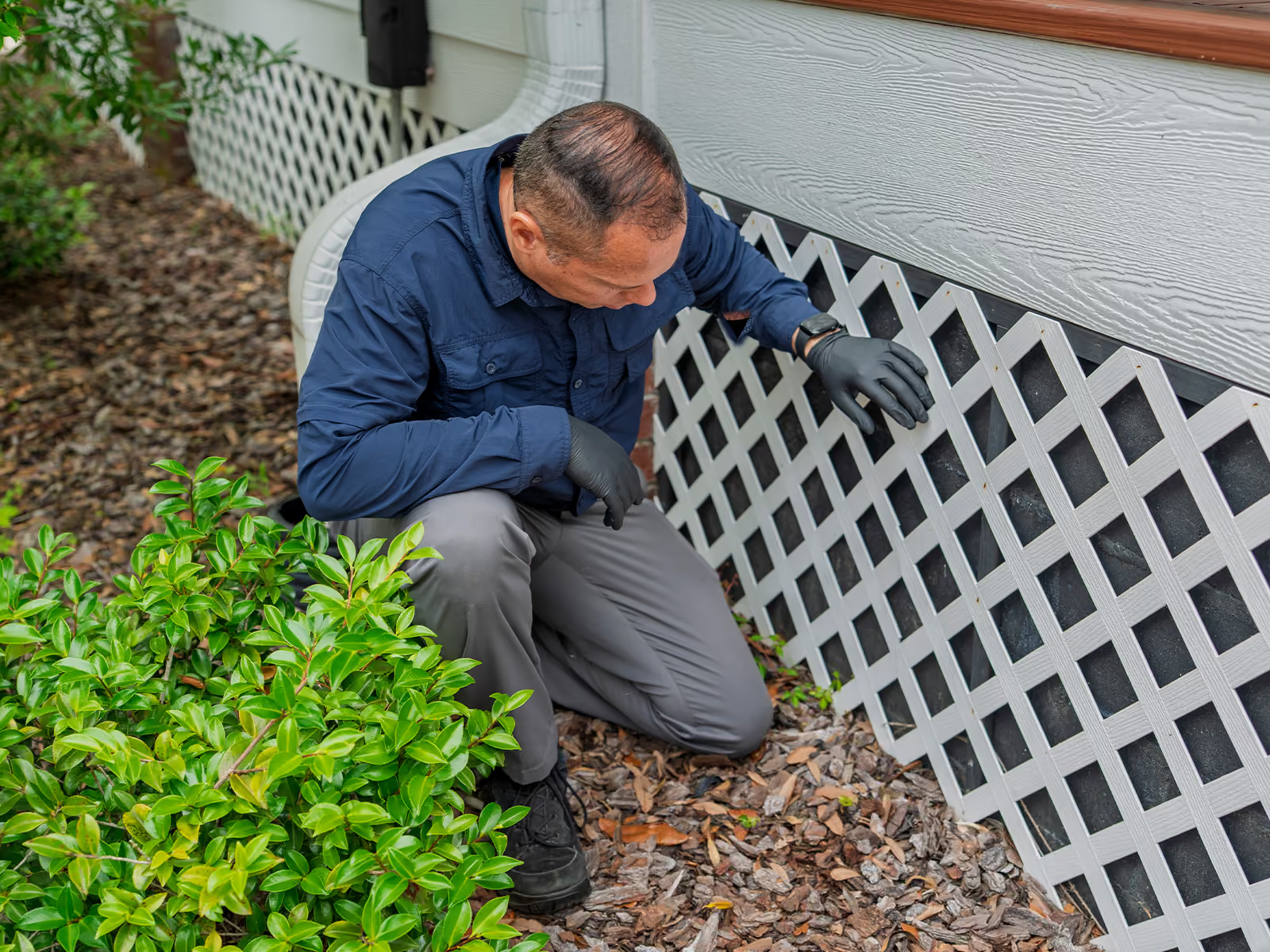
Gaps around roof vents, soffits, chimneys, and utility penetrations provide common entry points. Overhanging branches and vines touching the roofline give roof rats a direct path onto the structure. Unsecured food sources, pet food left outdoors, and fruit trees can also draw them closer to the home.
During extended dry weather, roof rats may also travel farther in search of dependable food and water, increasing the likelihood of activity around homes and businesses.
One rat sighting can indicate a nearby nest, especially given how quickly roof rat populations can grow.
Scratching or scurrying sounds in the attic or walls, particularly at night, often point to roof rat activity overhead.
Gnaw marks on wood, wiring, or stored items, along with dark rod-shaped droppings, greasy rub marks along beams or wall lines, and shredded nesting materials are common signs of an infestation. Damaged wiring is a particular concern, as it can create a fire hazard.
Roof rats can contaminate food, surfaces, and stored belongings with their droppings and urine. Rodents can also carry pathogens and parasites that create health concerns for people and pets.
They can damage wood, insulation, plastic, stored belongings, and electrical wiring through their constant gnawing. Damaged wiring inside an attic or wall can be costly to repair and may increase the risk of an electrical fire.
Patriot Pest Management's home pest control plans include year-round control for roof rats and other common household pests. Additional fees may apply at the time of initial service.
Patriot Pest Management also provides commercial pest control for Northwest Florida businesses dealing with roof rat activity.
No. Roof rats are slimmer, more agile climbers with tails longer than their bodies, and they typically nest above ground in trees, attics, and rooflines. Norway rats are larger and heavier-bodied, with tails shorter than their bodies, and they usually burrow at ground level.
Roof rats generally avoid contact with people and bites are uncommon. The greater concerns are the diseases they can carry and the property damage caused by their gnawing.
Roof rats are primarily active at night. Seeing one during the day can happen if its nesting area has been disturbed, food is limited, or several rats are competing for resources.
If you're concerned about roof rats around your property, Patriot Pest Management offers comprehensive solutions for roof rats in Escambia, Santa Rosa, and Okaloosa counties. Call (850) 994-3990 or request a free estimate online.

Mario with Patriot Pest is fantastic to work with. He’s professional, easy to communicate with, and always delivers great customer service. Highly recommend Carlos and the team with Patriot Pest Management!
Rebekah K.
Pace, FL

5 stars all around, courteous, prompt, communicated exactly with he was doing and how to keep the pets safe! Pay that man! It was simple, easy and fast!
Tim F.
Pensacola, FL

When other companies came up short, Patriot Pest found the solution and delivered results. They arrive on time, communicate clearly, and stand behind their work with integrity. Great people, outstanding service, and a company you can trust. If you need pest control done right the first time, Patriot Pest is the company to call.
Jesa S.
Pace, FL






Helpful Tips & Info